Julia Seidel ("Jill")
Age 323 Feb 2000
Honolulu, Hawaii (USA)
Overdose
TDoR list ref: tdor.info/3 Feb 2000/Jill Seidel
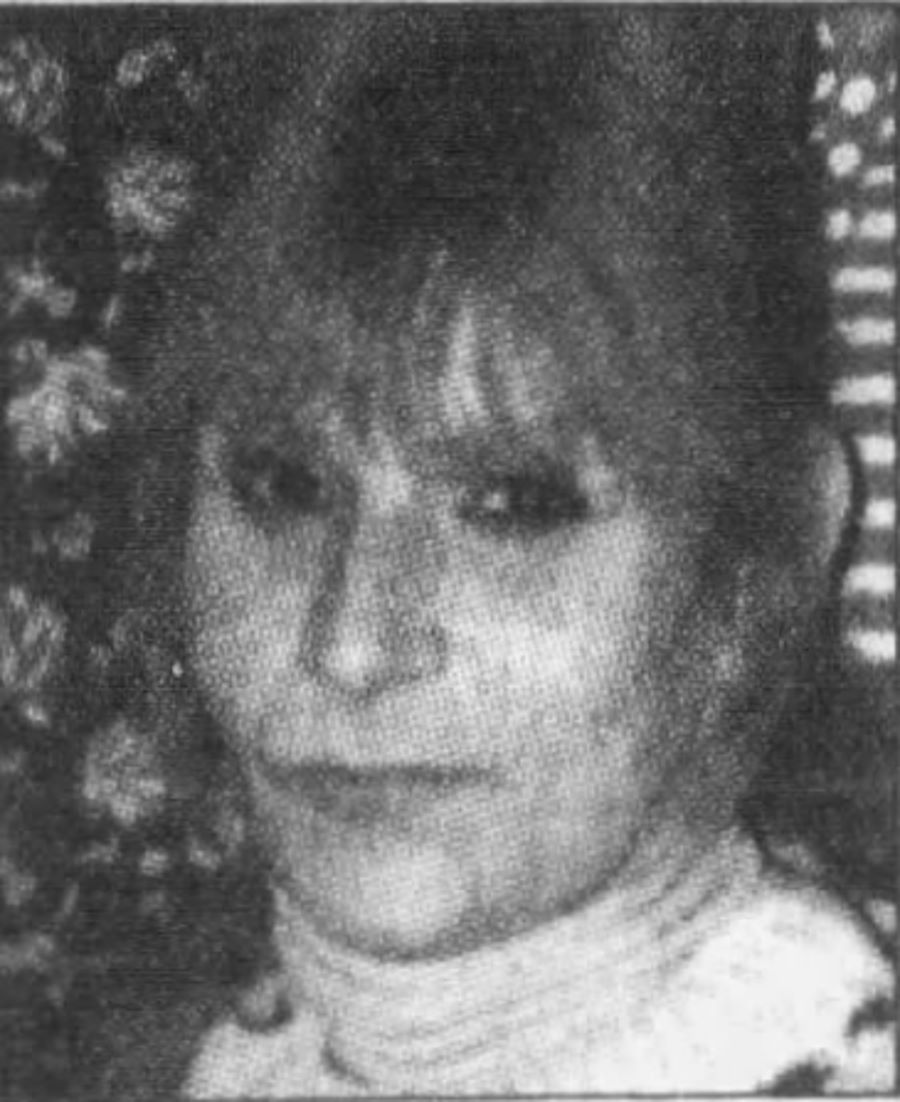
Jill was a homeless transgender woman with AIDS who died of an apparent drug overdose after being found unconscious in the park.
[She] embodied all that mainstream society rejected: a homeless transsexual with mental problems and AIDS who turned tricks to feed a drug and alcohol habit.
[She] died Feb. 3 of an apparent drug overdose after being found unconscious in the middle of the night near Aala Park in Chinatown.
[Her] body remains unclaimed at the morgue.
More than just the sadness of a thrown-away life, the real tragedy is that so many people closed their eyes to Seidel's problems, said Carolyn Golojuch, the mother of a gay son who is president of the Oahu chapter of Parents, Family and Friends of Lesbians and Gays.
"If we don't speak up now, when will it be our turn when no one will care and no one will notice?" she said. More than just addiction, Seidel's biggest problem was finding acceptance, even in [her] own mind, said Tammy Wronski, a transsexual who was one of the few friends who tried to help. They shared a lot in common. They were alcoholics with AIDS who met at a recovery meeting at the New Town Alano Club in Chicago. Wronski was born "Tom" but changed his name to Tammy.
Seidel had [her] name legally changed to Julia. They were "gender benders," or what locals call mahus. They considered themselves born the wrong gender and wanted to live as women in an open-minded place. They thought moving to Hawaii would be paradise that would help them stay sober. At least that's what Wronski thought.
Seidel slipped back into a spiral of addiction, self-loathing and depression.
Those who knew [her] and even those who didn't, wish there was a way to restore some dignity after [her] death.
"Even though the value of someone's life may be covered up in dirt, homelessness and addiction, it doesn't make their life expendable," said Jerry Ford, assistant director of Gregory House Programs, a Honolulu agency that provides housing for people suffering from HIV and AIDS.
"This is a loss for all of us, whether we understand that person or not"
Wanted to be female
To understand Seidel would mean going back to the [child] who knew at the age of 6 that [she] wanted to be a girl.
Seidel was born in Poland, but his family settled in Chicago when he was young. [Her] father was never in the picture, and [her] mother died of cancer when [she] was a teenager. [She] told friends later in life that [her] mother had accepted [her] sexual identity. But [she] didn't get along with [her] older sister, [her] only family left.
So [she] was on [her] own at 16, and that's when [she] discovered [trans sex work]. The lifestyle led to an AIDS diagnosis in the 1980s. Before Seidel turned 20, [she] was messed up with drinking and drugs and was severely depressed, said John Sloboda, a former roommate in Chicago.
In 1986, Sloboda and his lover welcomed Seidel to live with them. In the sober times, Seidel was making a living doing clerical work and serving coffee at an advertising company. A tall blond, [she] dressed as a woman and went by the nickname "Jill."
"We were both struggling with our recovery," said Sloboda, who met Seidel at an Alcoholics Anonymous meeting. "The truth slowly came out that she was a prostitute."
Instead of paying the rent, Seidel would buy drugs, Sloboda said. "We ended up even buying her nylons and hair spray," Sloboda said. "I'd come home, and we'd have a few drinks and dance around the apartment. She was a fun person to have around, otherwise I would have thrown her out long before that. Finally, we told her she'd have to find another place to live."
Sloboda later found a diary Seidel left behind. It recorded an experience in a psychiatric unit where Seidel had been taken after attempting to slit [her] wrists. [She] wrote that the suicide attempt pushed him toward recovery from substance abuse.
"She tried to get sober and clean," Sloboda said. "But it was an ongoing struggle all her life."
Like a daughter
It wasn't as if no one ever loved Seidel. [She] was disowned by [her] sister but was welcomed into another family Tammy Wronski's. "I first met Jill at Thanksgiving of 1996," said Jean Wronski, Tammy's mother, who considered Seidel as close as another daughter. They talked about Seidel's upbringing and Seidel's mother's death.
"When my daughter decided to go to Hawaii, I did cover Jill's plane ticket, and she did repay me," she said. But in the following years, she made arrangements twice for Seidel to return to the Mainland, and both times, Seidel backed out.
"To me, she had opportunities where she could have really bettered herself," Jean Wronski said. "And I felt sorry for her. It's just a shame to me."
Tammy Wronski also had a falling out with Seidel Seidel borrowed a videotape that included some of their fun times dressing up and going out When Wronski got the tape back, the video of Seidel was taped over with a news broadcast about the death of a boy who had suffered a disease since childhood.
"It was like a tombstone," Tammy Wronski said. If Seidel was trying to foreshadow what was to come, there were other clues.
Piles of vodka bottles accompanied Seidel's evictions from Waiki-ki apartments. There were more stays in rehabs and the psychiatric ward at the Queen's Medical Center.
"I can't tell you the number of times she would say, 'I'm a freak! I'm a freak!' " Ford said. This is what people would tell her, and I think, deep down, she had trouble accepting herself.
"It's not just a matter of 'did she choose this?' or 'was she forced into this lifestyle? " he said. "This was her life, and she was taken away from so many things we take for granted."
At the end of [her] life, at age 32, Seidel finally found a father figure.
"We met here on the street, and we became the best of friends," said Robert Frizzell, 55, who can be found most days sitting by his walker on the sidewalk near Aala Park. "She might have been a mahu, but I didn't care. I loved her anyway. Not romantically, but she was good to me, and I tried to be good to her."
Seidel would stick up for him] on the streets and would pull a knife on anyone who appeared threatening. Seidel would make sure he had a blanket at night, and Frizzell affectionately called Seidel "Zena."
In [her] mellow times, Seidel would stop in at River of Life Mission for food or a shower and would sit down at the piano to play Elton John songs.
Sharon Black, the liaison between the homeless and the Honolulu Police Department, was familiar with Seidel's plight Where the system fails people like Seidel, Black says, is in coming up short on follow-up treatment "It has to be a whole program," she said. "If a link is broken in the chain, then there's a person who won't get back on their feet"
No place for such girls
It would be wrong to say society never offered Seidel a way out of a life of addiction. What's debatable is whether it was ever the right help.
"There's really no recovery house for us girls," Tammy Wronski said.
There was always the question of whether Seidel should be in recovery with the men or the women. And Wronski says Seidel never fit in either place.
"It's like we're part of the flock that is turned away," said Ashliana Hawelu, a transsexual and an HIV outreach educator for Ke Ola Mamo, a Honolulu transgender support group.
But an important part of overcoming addiction is taking personal responsibility, said Chad Buchanan, program coordinator for the Salvation Army's family services office in Oahu.
"You have to decide as an abuser that you want to fix the problem," he said. "Of course, it's hard if people are not accepting you."
Now that it's too late to help Seidel there is a group urging others outside their circle to at least pay attention.
"It's a human life, and, sadly, a lot of people just don't care because it doesn't fit into what they see as acceptable," said Barbara Riley, co-pastor of Our Family Christian Church in Makiki, which is planning a memorial service. "This challenges people."
Society did not extend to Seidel the same thing that is held back from many people who are seen as outcasts, said Golqjuch, the president of Parents, Family and Friends of Lesbians and Gays.
"What I would like to come out of this is a renewed sense that every life is precious, every life has value, and every life is sacred," she said. "And if we really believed that, she wouldn't have died alone in a park at night, and there would have been someone to claim her body."
https://www.newspapers.com/article/the-honolulu-advertiser-jill-seidel/143679845/
https://www.newspapers.com/article/the-honolulu-advertiser-death-of-transge/143680384/
https://www.newspapers.com/article/the-honolulu-advertiser-death-of-transge/143680340/